Access Is Not Adoption: What AIA 2026 Taught Us About AI
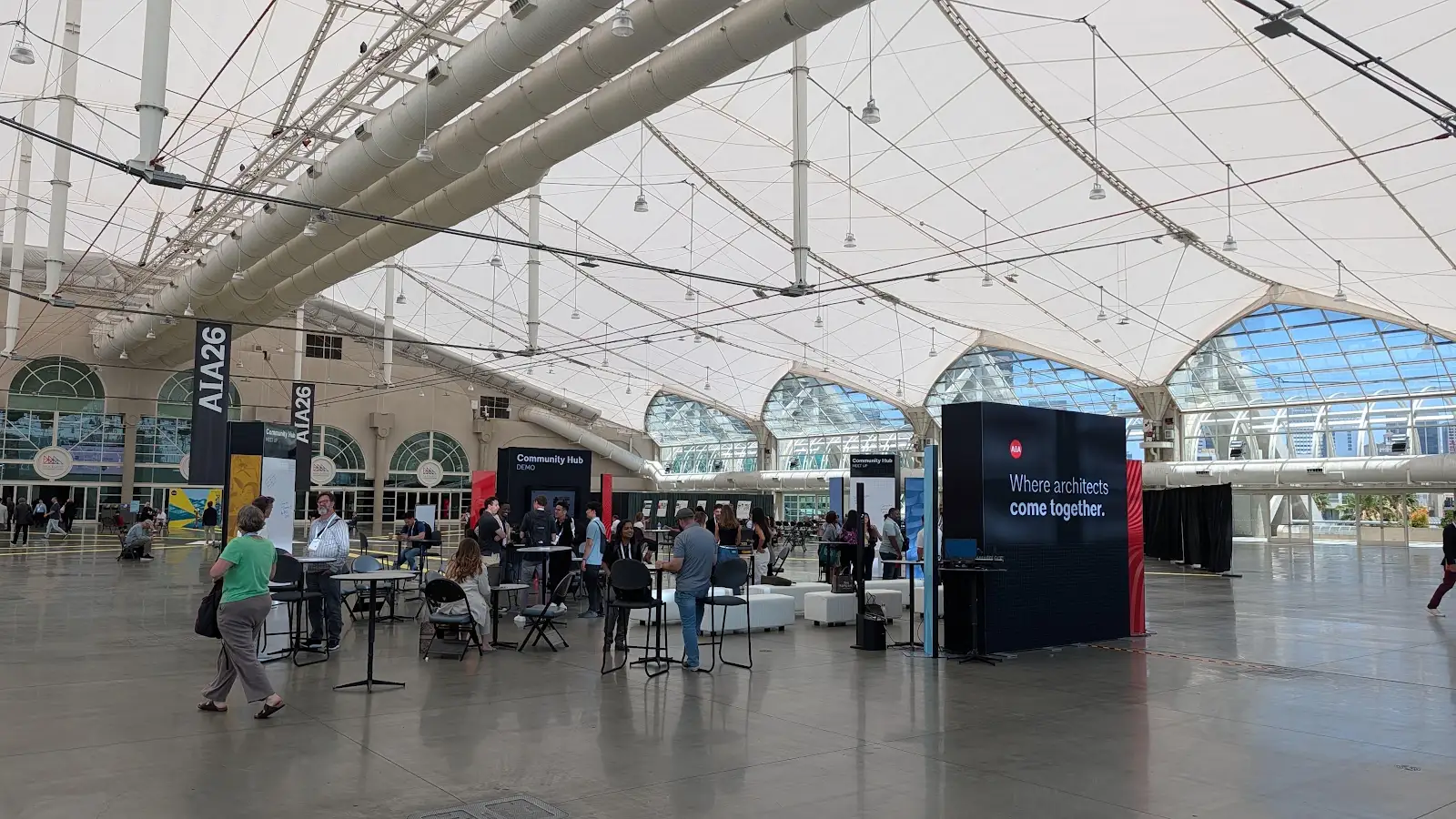
Downtown Engineers CEO Ray Ramos attended the 2026 AIA Conference on Architecture in San Diego this June. He came back with a sharper view of the distance between experimenting with AI and actually changing how a firm works.

Events
AIA

Introduction
Downtown Engineers CEO Ray Ramos attended the 2026 AIA Conference on Architecture in San Diego this June. He came back with a sharper view of the distance between experimenting with AI and actually changing how a firm works.
That gap has a name. A recent CBRE piece by Amber Miller called it sustainable AI adoption and framed it around three things: data quality, governance, and alignment. For an MEP firm, data quality starts long before any AI tool enters the picture. It starts with how consistently the business runs. Do you define project phases the same way on every project? Can you trust your time, fee, change-order, and QA/QC data? Are teams following the same SOPs, and does someone own each process and definition? When those foundations are weak, AI does not fix them. It makes the inconsistencies faster and more visible.
Ray has been direct about his own experience. His biggest AI misstep so far was assuming that access would create transformation. The firm bought subscriptions, made tokens available, and gave the team accounts across several services. Productivity improved on isolated tasks, but it did not change how the company operated day to day.
The lesson he took from it is simple to state and hard to live by. Access is not the same as adoption. Prompts are not process. A collection of AI tools is not an AI strategy.
So the work at Downtown right now is not about finding another tool. It is about the operating system of the company first, and AI second. Get the definitions, the data, and the processes consistent, and AI has something solid to stand on. Skip that, and it just accelerates the mess.
There is a broader picture behind this too. At a TAP and AI Task Force forum at the conference, some of the largest AEC firms in the country described AI moving from a resource you ask, to a coworker that does the work, to infrastructure woven into everything. Most firms sit between the first two. The honest read is that the industry is still near the bottom of that curve, with almost everything still ahead, arriving faster than it looks.
If you lead a small or midsize AEC firm, Ray would like to hear from you: what have you tried with AI that did not work, and why? The industry talks a lot about the AI programs that succeeded at large firms. There is just as much to learn from the experiments that failed.
Events
AIA
Industry
Networking
Ready to design?
Speak to one of our executives now.
Sign up to our newsletter
Code changes, project insights and practical guides, straight to your inbox.